A leading Ivy League university with tens of thousands of online learners
A leading US public university offering a wide range of online courses, marketing materials, and orientation videos is preparing to meet the upcoming ADA Title II web and mobile accessibility requirements by April 2026. With tens of thousands of students enrolled across its digital learning platforms, the Online Education team, in collaboration with the university’s accessibility and communications departments, needed an efficient way to ensure all video and online materials comply with WCAG 2.1 Level AA standards.
To achieve this, the team sought a solution that could automatically check videos containing animation for flash warnings and other potential visual triggers, while also helping them add captions and audio descriptions in multiple languages to support diverse student needs. The ability to generate detailed PDF accessibility reports was equally important, as these reports play a key role in the university’s VPAT documentation and internal accessibility reviews.

New ADA Title II Requirements and No Clear Path to Video Accessibility Compliance
The university’s Online Education team faced increasing pressure as new ADA Title II accessibility regulations introduced an April 2026 compliance deadline for public institutions. The updated rule requires all digital learning content, websites, and video materials to meet WCAG 2.1 Level AA standards, including accurate captions, audio descriptions, and checks for visual triggers such as flashing animations.
The team encountered three major challenges:
Limited accessibility expertise: Although experienced in online education, the team lacked in-depth understanding of WCAG 2.1 accessibility criteria and how to apply them effectively to animated videos, marketing materials, and course content.
No unified accessibility tool: There were no reliable solutions to automatically detect video accessibility issues or identify what was missing, leaving the team without a clear path to achieve ADA Title II compliance or implement fixes efficiently.
Reporting and documentation gaps: The university also needed structured PDF accessibility reports generated by automated tools to support VPAT documentation and ongoing ADA Title II accessibility audits.
We needed a partner who could show us exactly what was required and help us fix it at scale.
- the Online Education lead explained.

Simplifying ADA Title II Compliance With Subly’s Accessibility Platform
After adopting Subly, the university’s Online Education team, together with Marketing & Communications and Student Orientation, integrated automated accessibility checks and video fixes into their review and production process.
Subly provided:
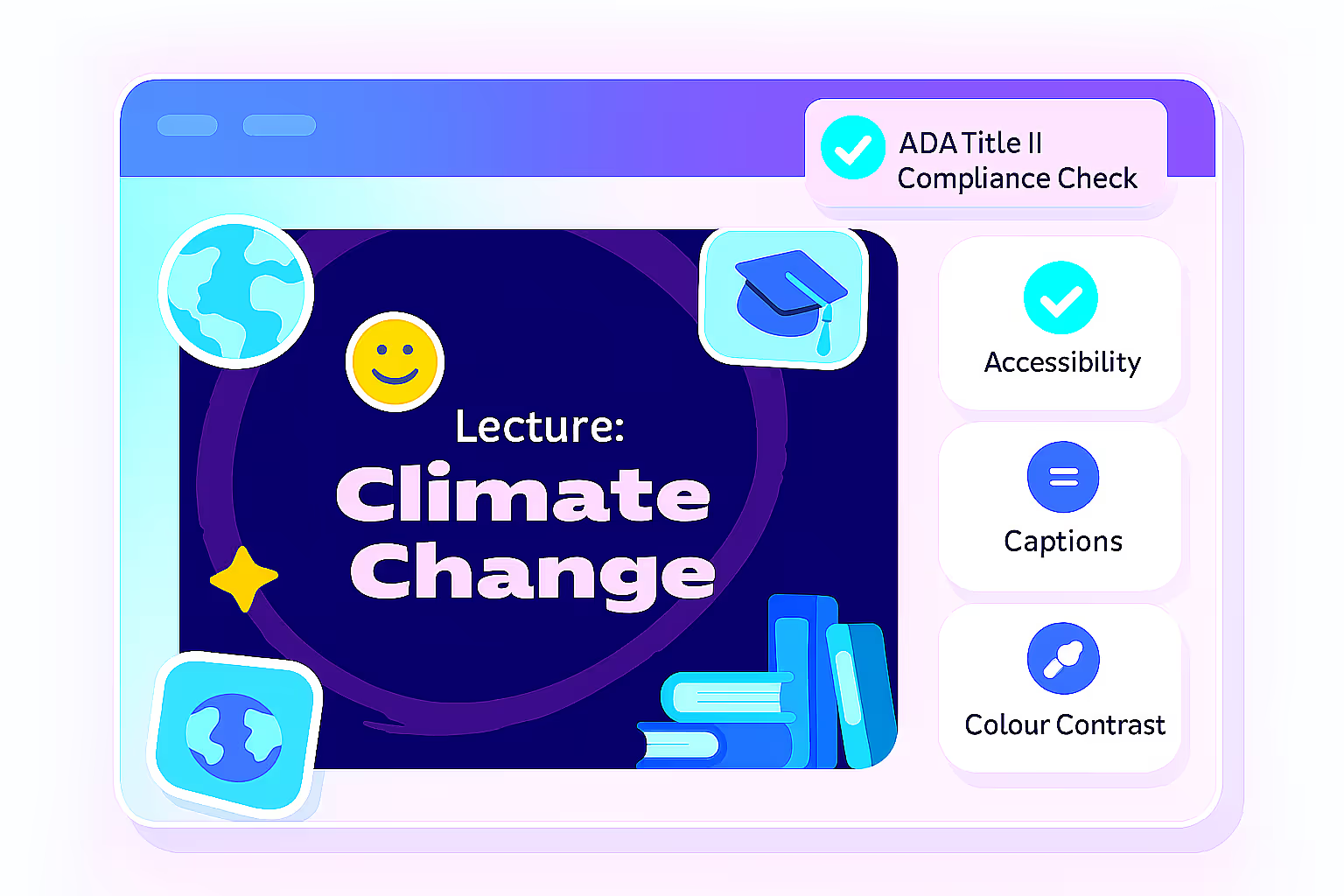
- Automatic ADA Title II and WCAG 2.1 compliance checks across online courses, marketing materials, and orientation videos. Using Subly’s Accessibility Checker, the platform verified captions, identified missing audio descriptions or descriptive transcripts, flagged flashing and colour contrast issues, and confirmed the correct use of language tags. Each report included clear explanations and industry best-practice recommendations, giving the team confidence in their accessibility standards.
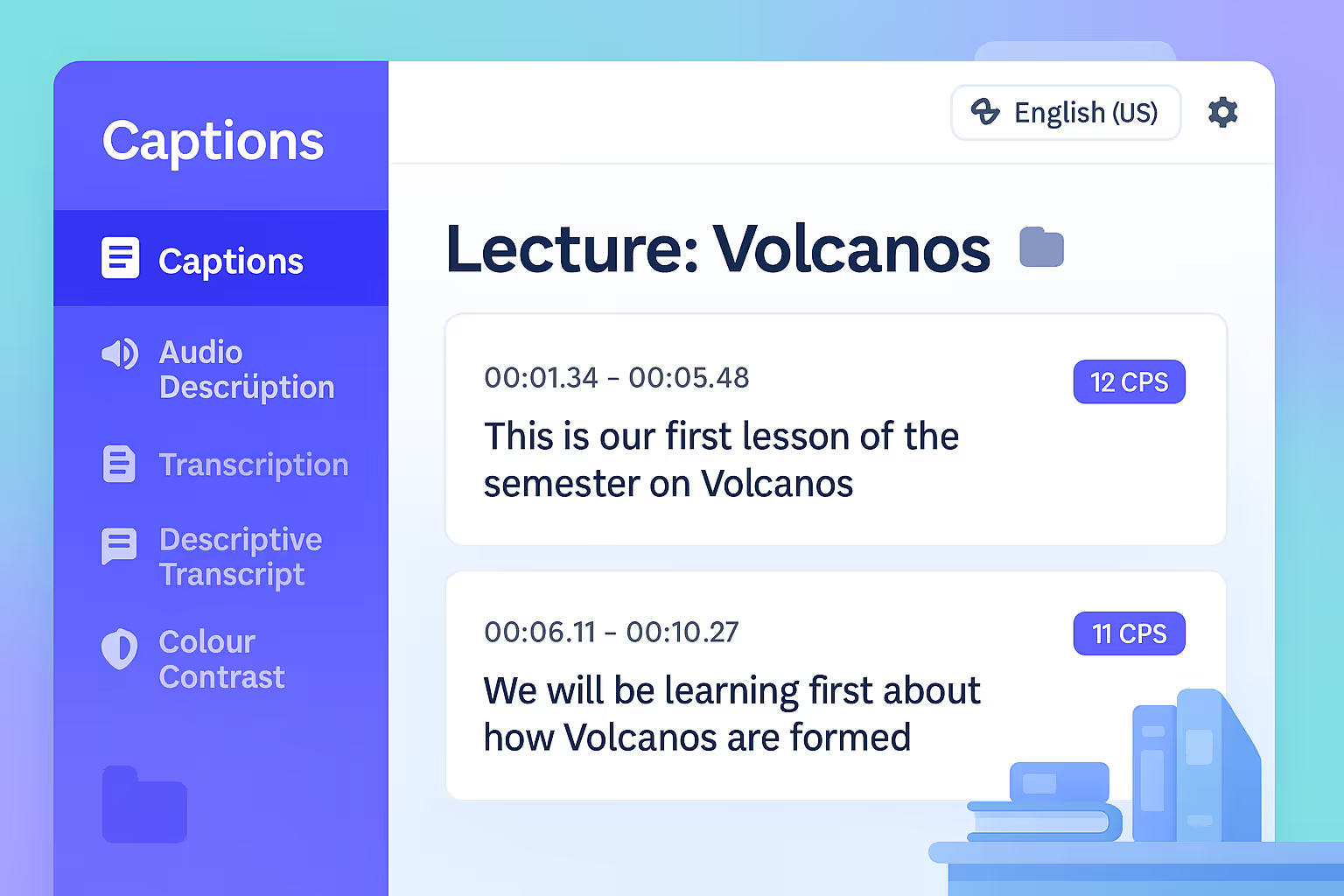
- Instant Caption and Transcript Generators to automatically produce captions and transcripts in multiple languages. The tool ensured captions met accessibility requirements for size, readability, and colour contrast, while transcripts supported accessible formats for students using assistive technology.
- Audio Description and Descriptive Transcript Generators built directly into the platform, allowing the team to create accessible versions of videos when required. While not all students need audio description, having the capability within Subly meant the team could generate compliant outputs whenever accessibility teams or course requirements called for it.
- Accessibility Editor for quick, in-platform adjustments without needing specialist accessibility knowledge, enabling staff to make fast edits and maintain WCAG 2.1 AA alignment.
By uploading both new and existing assets into Subly, the team could instantly identify compliance gaps, apply the right accessibility features, and generate PDF reports for VPAT documentation—streamlining their path toward full ADA Title II readiness by April 2026.

Full ADA Title II readiness, faster reviews, and confident compliance
With Subly, the university accelerated its progress toward ADA Title II compliance ahead of the April 2026 deadline. The Online Education, Marketing & Communications, and Student Orientation teams can now review and publish content with greater speed and clarity, supported by a fully auditable process aligned with WCAG 2.1 Level AA.
Automating accessibility checks and fixes has eliminated the need for external agencies and reduced manual review time across departments, resulting in notable cost and time savings. Staff now spend fewer hours on repetitive compliance tasks and more time creating engaging, inclusive learning experiences for students.
Subly gave us structure, efficiency, and confidence in our accessibility work. We’ve saved both time and budget, while ensuring every student has an equitable learning experience and our content meets ADA Title II standards.
- said the Online Education lead.
✨ Due to NDA restrictions, the brand cannot be named. This case study highlights the real challenges faced and the outcomes achieved using Subly.